This project is active and regularly updated.
Project Details
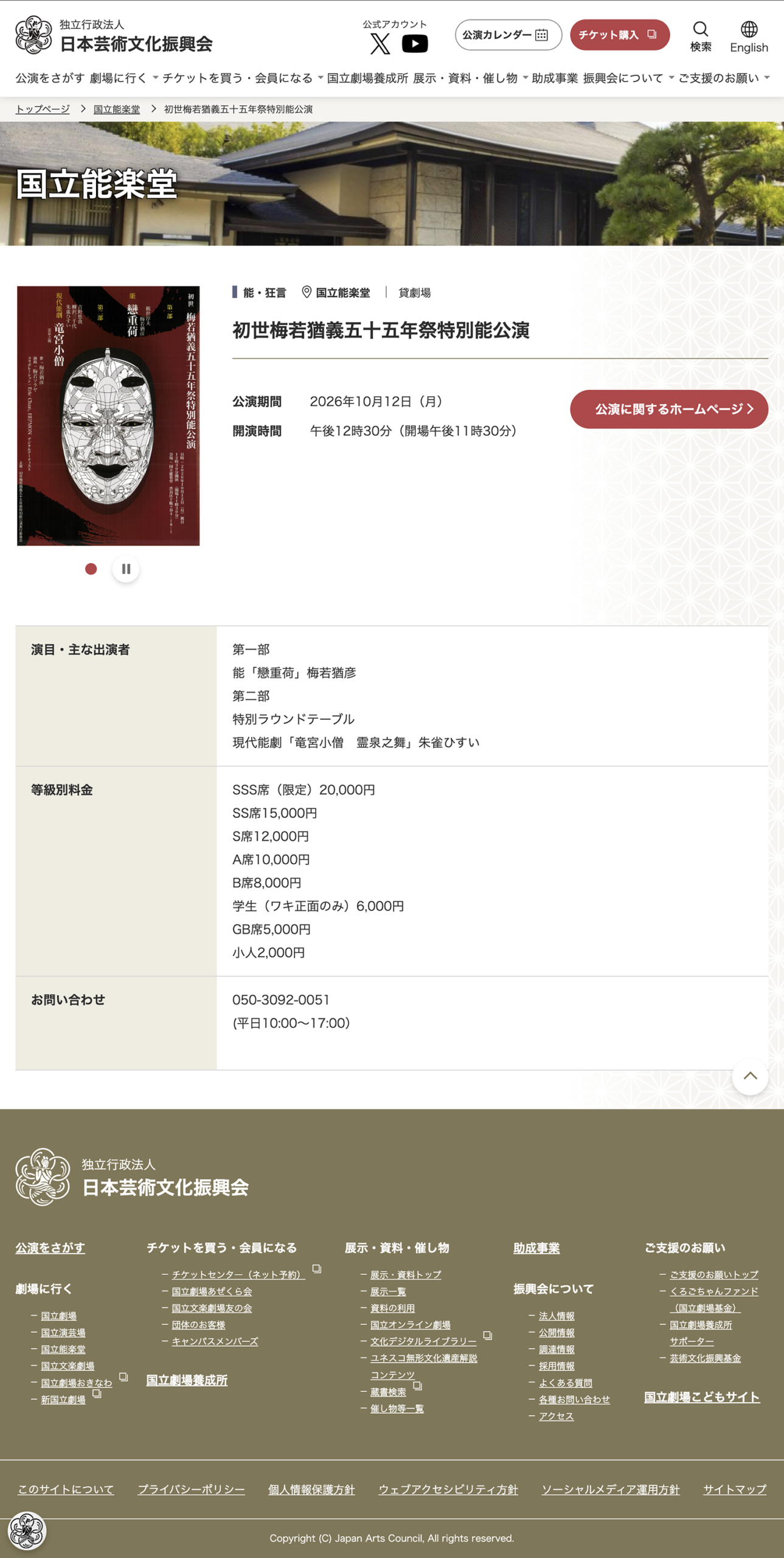
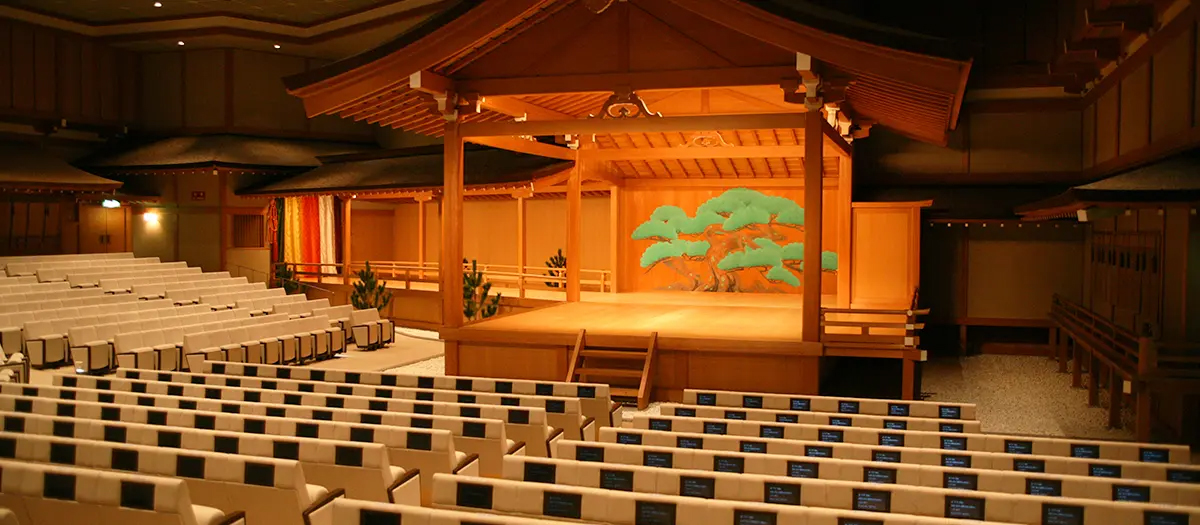
∙ Location: 国立能楽堂 National Noh Theatre (Kokuritsu Nohgakudō), Tokyo, Japan
∙ Date: Monday, October 12, 2026
Collaboration Overview
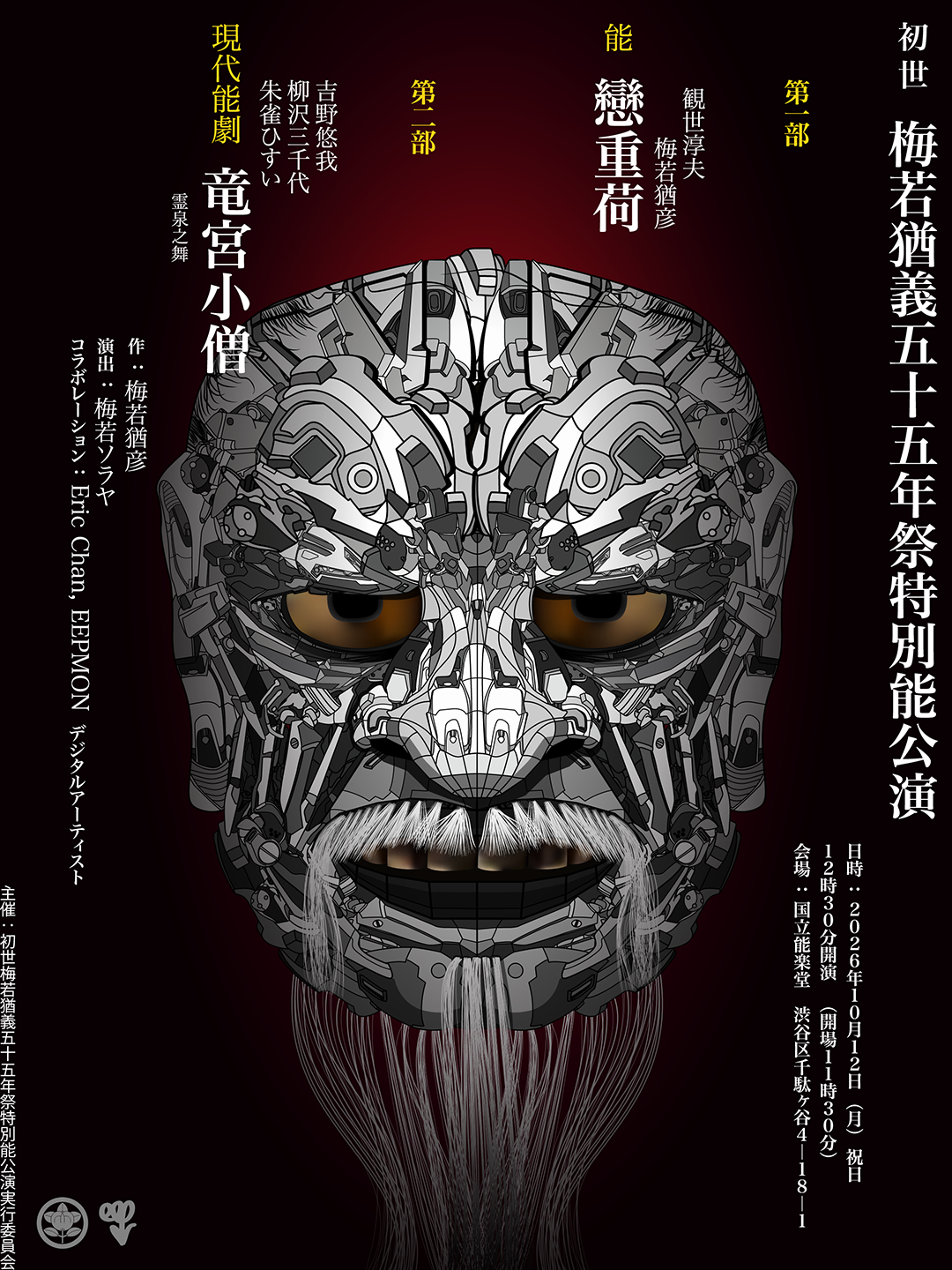
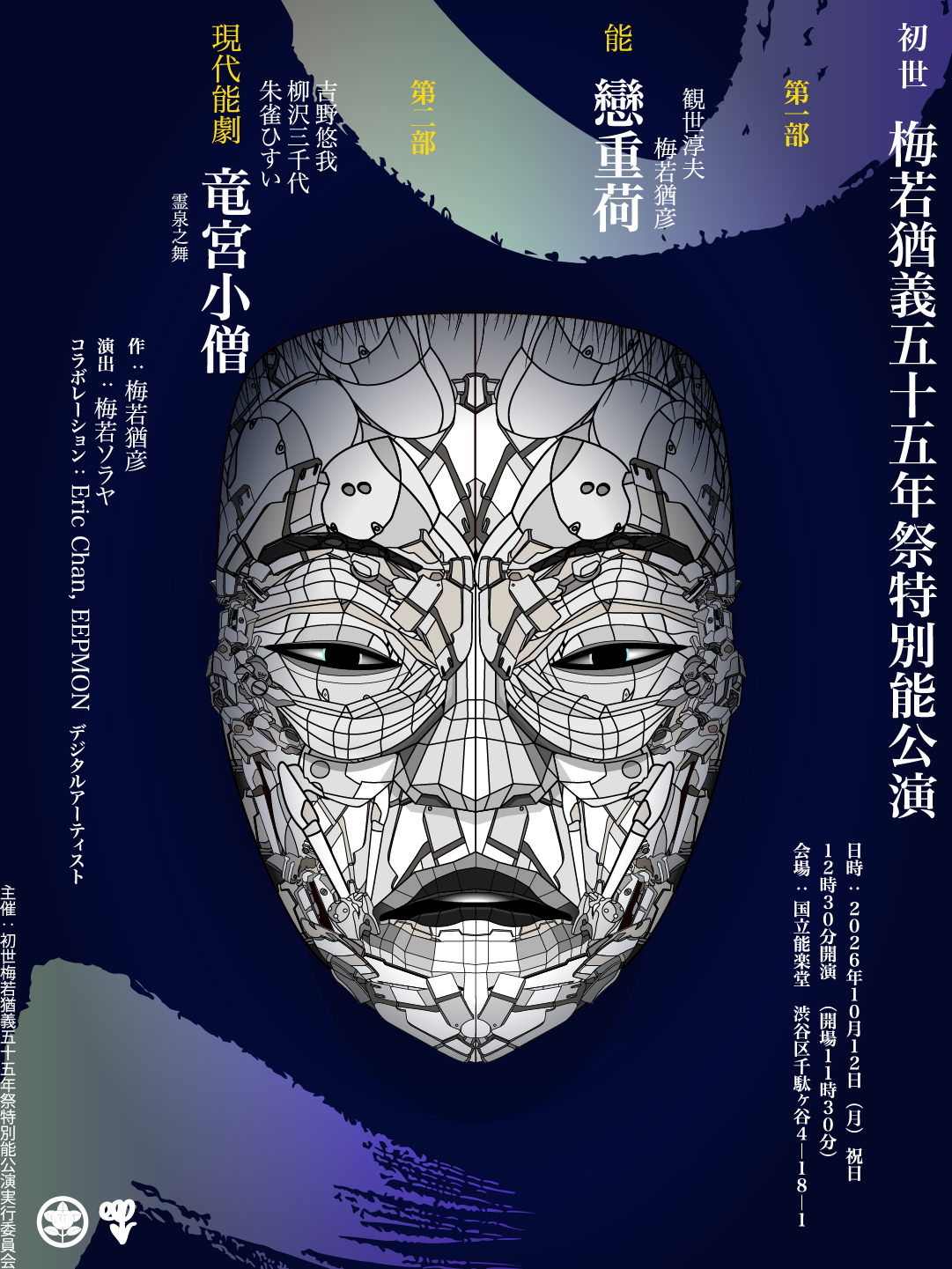
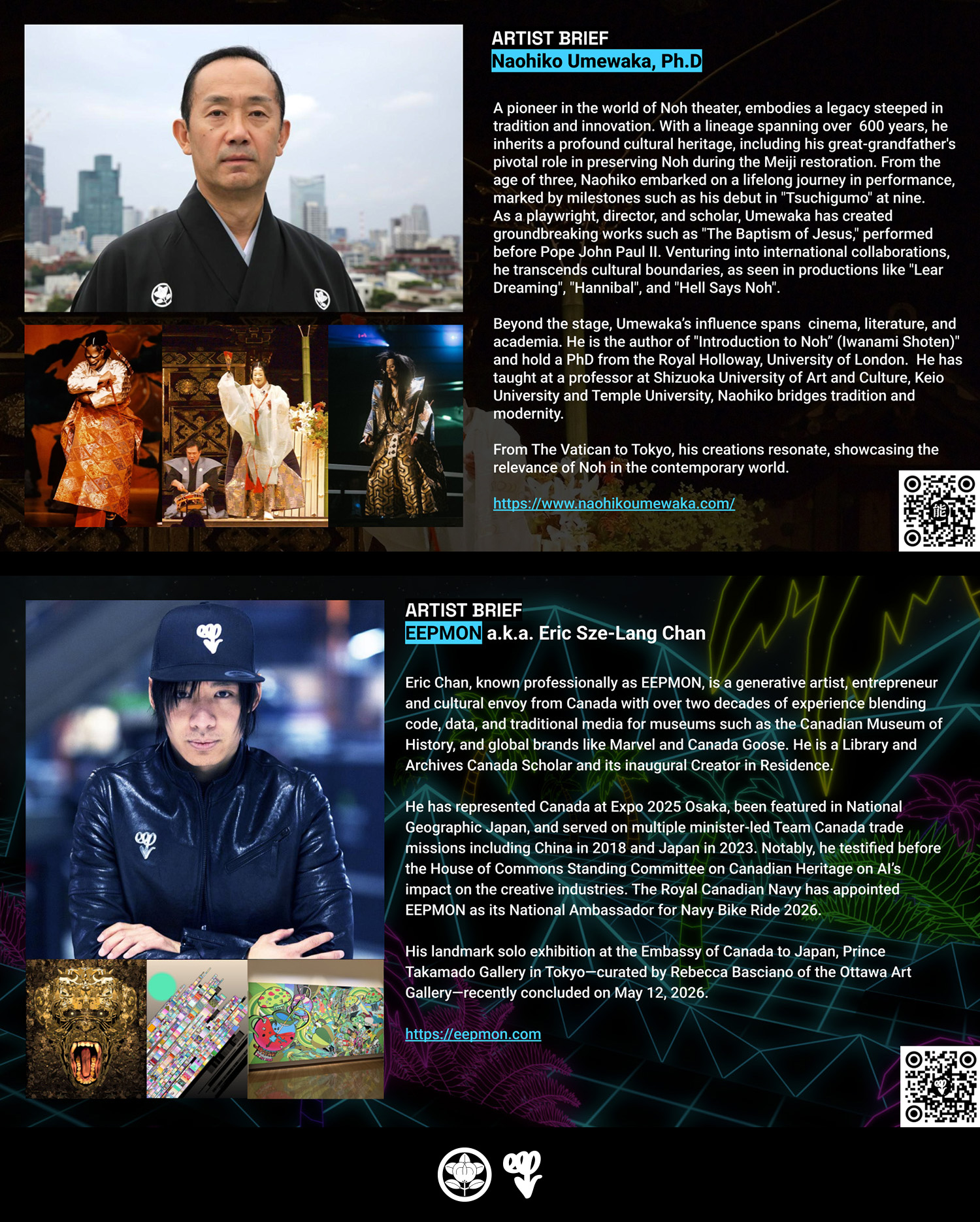
Ahead of the 2028 centennial anniversary of bilateral relations between Canada and Japan, digital artist EEPMON is collaborating with Noh Master Naohiko Umewaka by contributing his digital artistry for a special performance at the National Noh Theatre. The performance commemorates the 55th memorial anniversary of Noh Master, Naoyoshi Umewaka. Designed as an international cultural bridge, the initiative weaves together the traditions of classical Japanese theatre—recognized as a UNESCO Intangible Cultural Heritage of Humanity—with modern Canadian digital design, creating an artistic dialogue that connects historical heritage with the digital age.
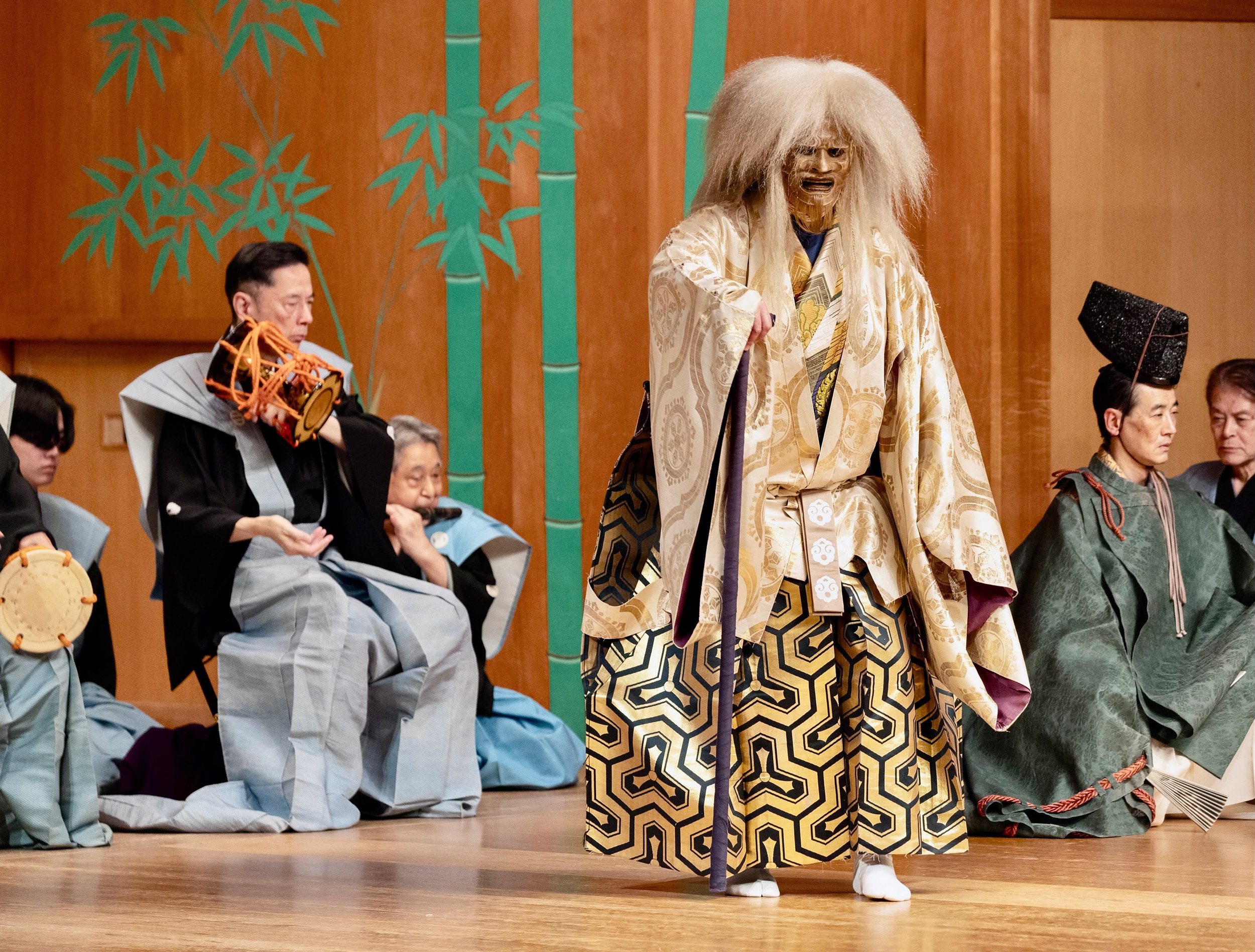
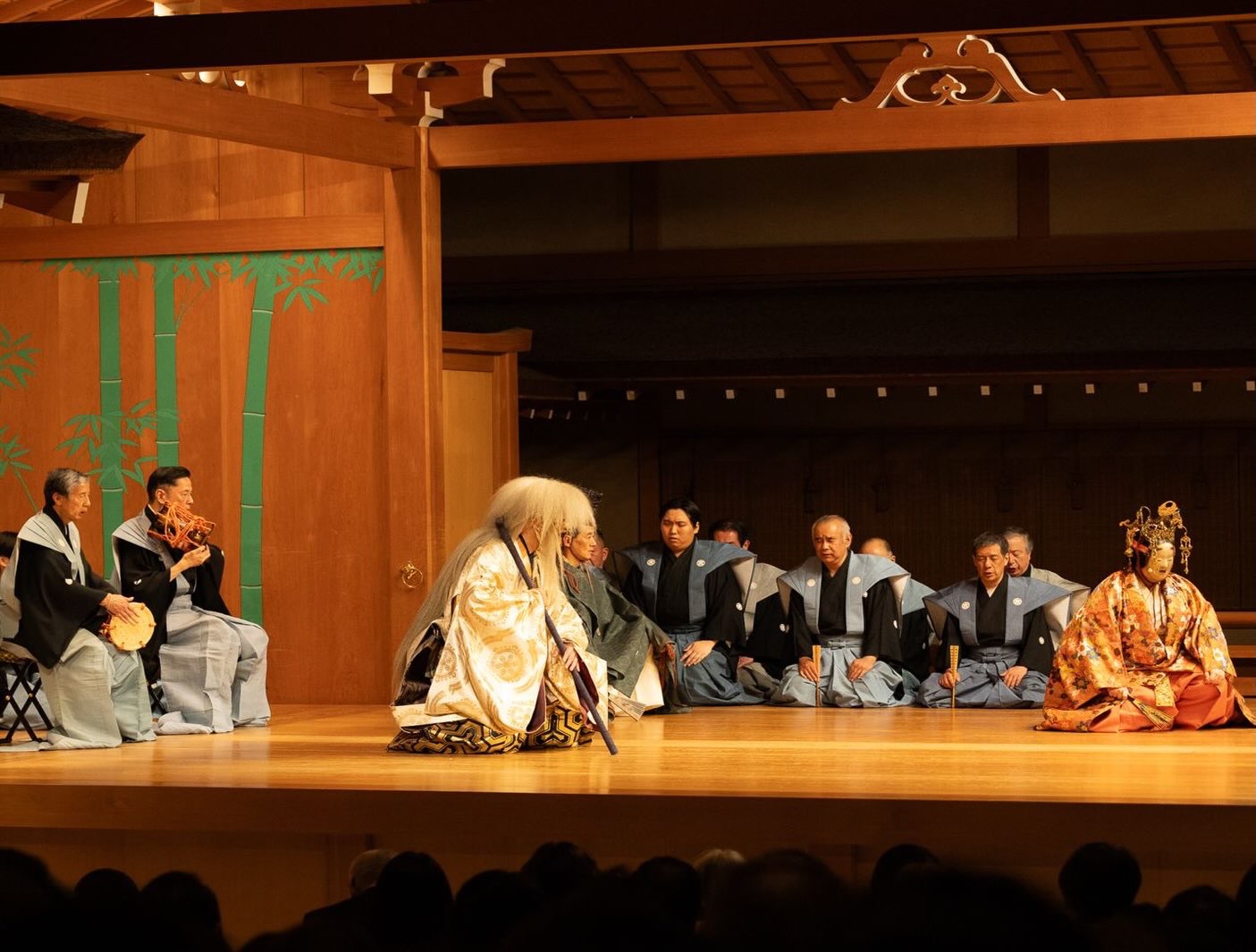
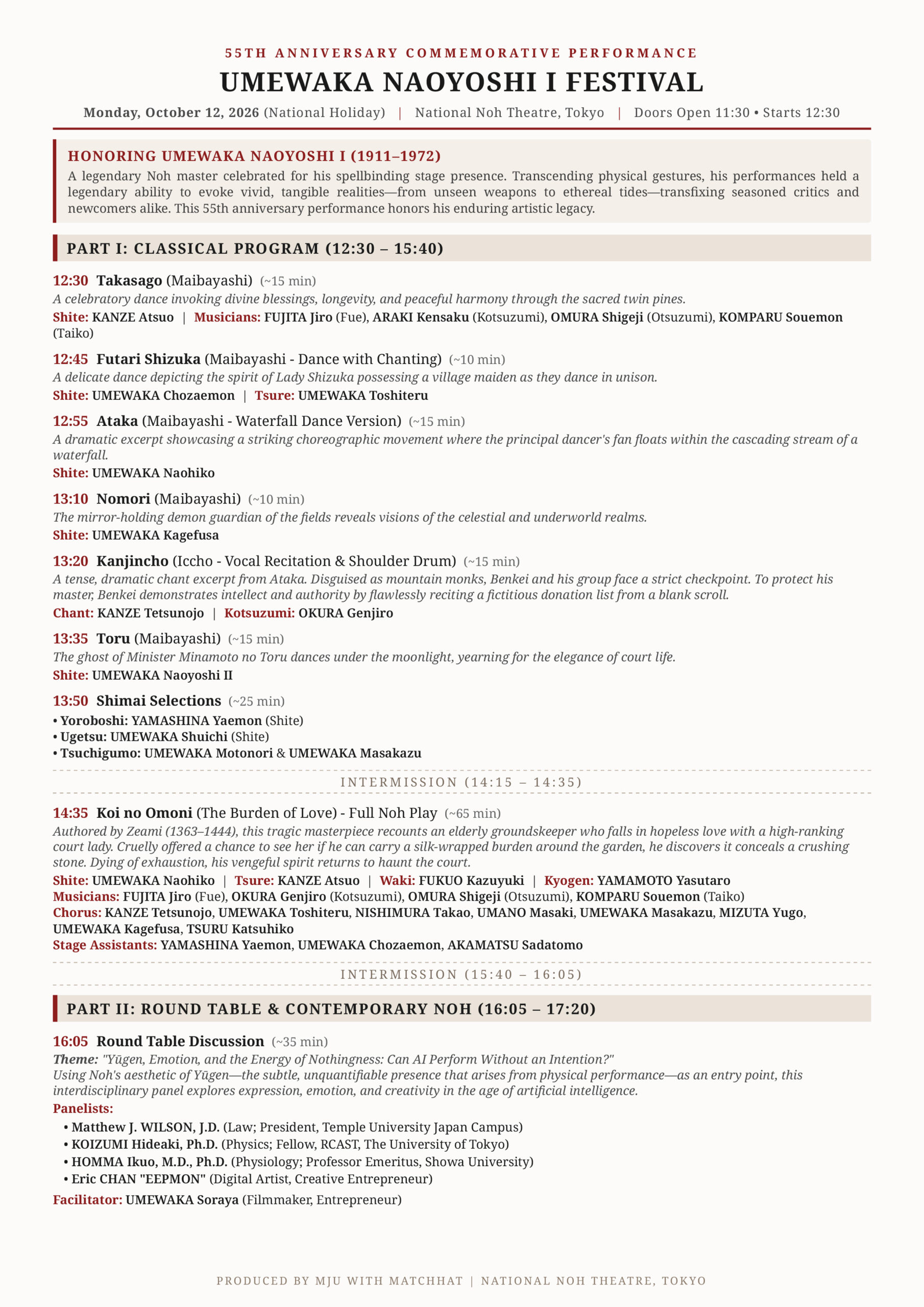
Part I was the classical program, running from 12:30 to 15:40 as part of the 55th anniversary commemorative performance honouring Umewaka Naoyoshi I (1911-1972). It opened with a series of maibayashi dances, beginning with the celebratory Takasago, followed by Futari Shizuka, the waterfall dance version of Ataka performed by Umewaka Naohiko, Nomori, the vocal recitation of Kanjincho, and Toru performed by Umewaka Naoyoshi II. A set of shimai selections followed, featuring Yoroboshi, Ugetsu, and Tsuchigumo, grounding the afternoon in the precision and stillness of the classical repertoire.
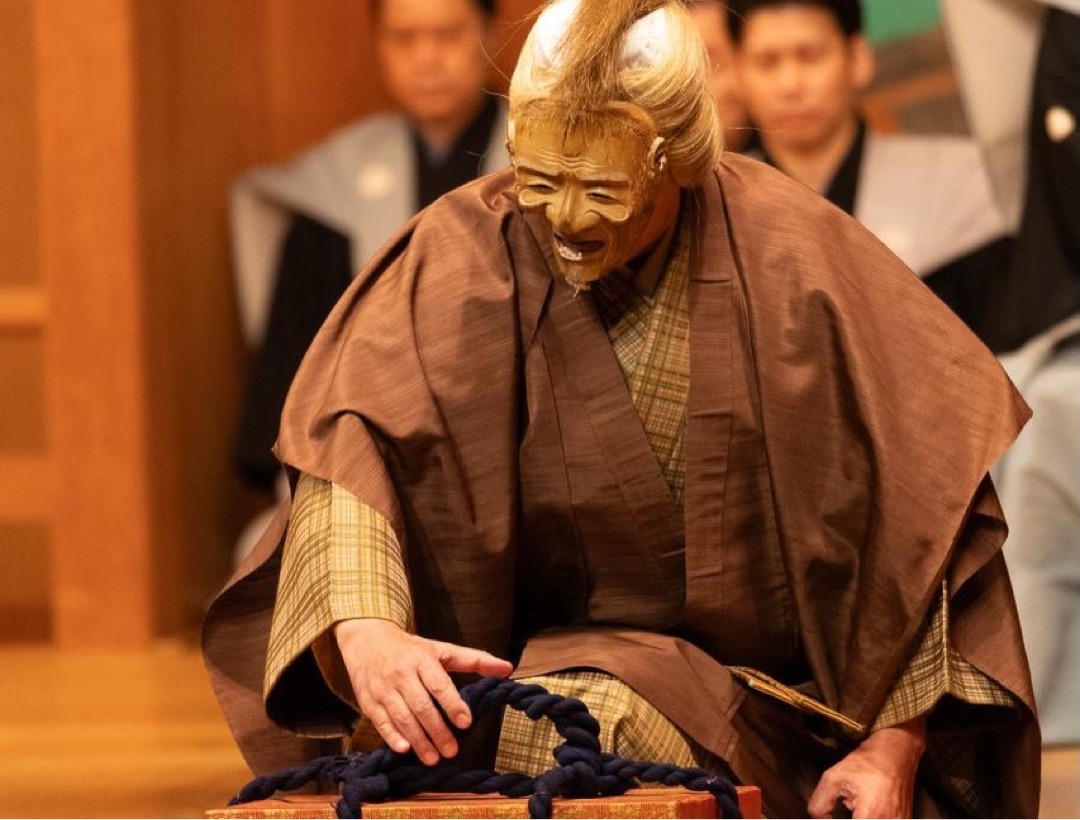
After an intermission, Part I closed with the full Noh play Koi no Omoni (The Burden of Love), authored by Zeami (1363-1444). In it, an elderly groundskeeper falls in hopeless love with a high-ranking court lady, and is cruelly offered a chance to see her if he can carry a silk-wrapped burden around the garden, only to discover it conceals a crushing stone. Dying of exhaustion, his vengeful spirit returns to haunt the court. Umewaka Naohiko performed the shite role, with Kanze Atsuo as tsure, Fukuo Kazuyuki as waki, and Yamamoto Yasutaro in the kyogen role, bringing the classical program to a tragic and powerful close before the round table and contemporary work in Part II.
In addition to his creative contribution, EEPMON will participate in a special panel discussion titled, Yūgen, Emotion, and the Energy of Nothingness: Can AI Perform Without an Intention?. Yūgen (幽玄) is a traditional Japanese aesthetic concept that describes a profound, mysterious sense of beauty that is felt rather than explicitly seen.
The panel features distinguished speakers including:
∙ Matthew J. Wilson, J.D. – President and Dean, Temple University Japan Campus
∙ Hideaki Koizumi, Ph.D. – Fellow, Research Center for Advanced Science and Technology, University of Tokyo
∙ Ikuo Honma, Ph.D. – Professor Emeritus, Showa University School of Medicine
∙ Eric Chan, a.k.a. EEPMON – Digital and Generative Artist, Creative Entrepreneur
Moderator: Soraya Umewaka
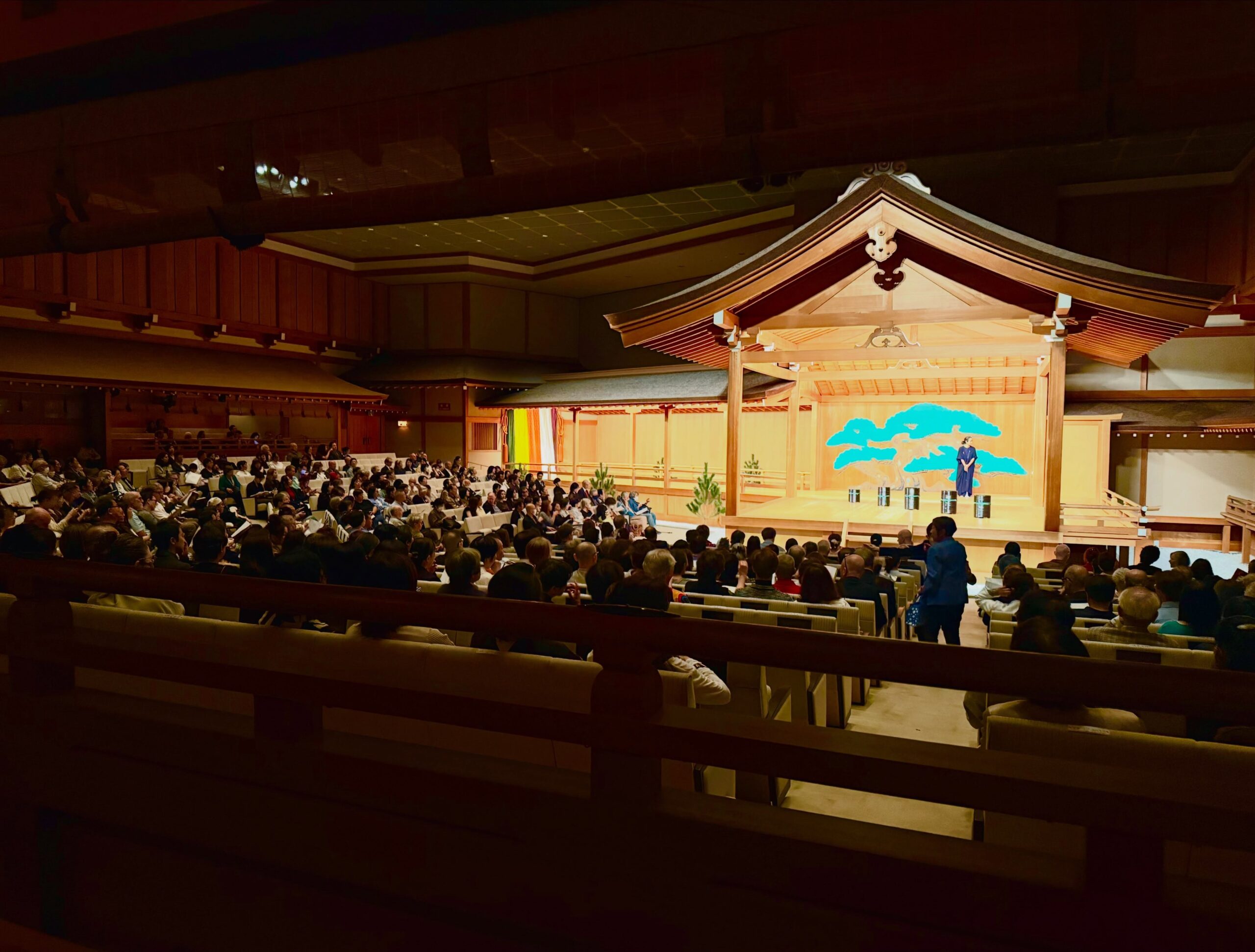
The round table discussion opened Part II at 16:05, under the theme “Yūgen, Emotion, and the Energy of Nothingness: Can AI Perform Without an Intention?” Facilitated by Umewaka Soraya, the panel brought together Matthew J. Wilson, President of Temple University Japan Campus, Hideaki Koizumi, Fellow of RCAST at the University of Tokyo, Ikuo Honma, Professor Emeritus at Showa University, and Eric Chan, known as EEPMON, as the practitioner voice. Using Noh’s aesthetic of yūgen, the subtle and unquantifiable presence that arises from physical performance, as its entry point, the discussion explored expression, emotion, and creativity in the age of artificial intelligence.
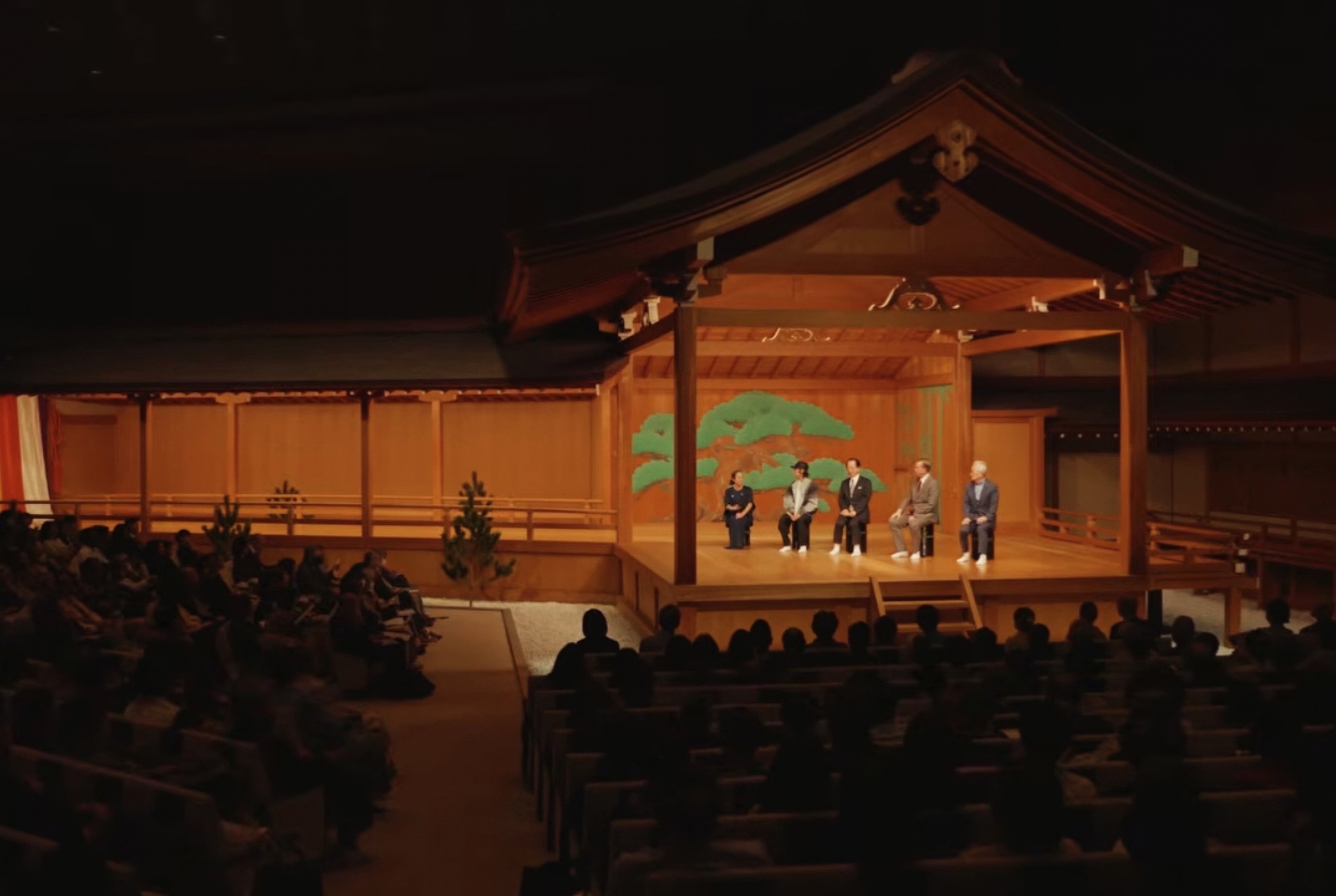
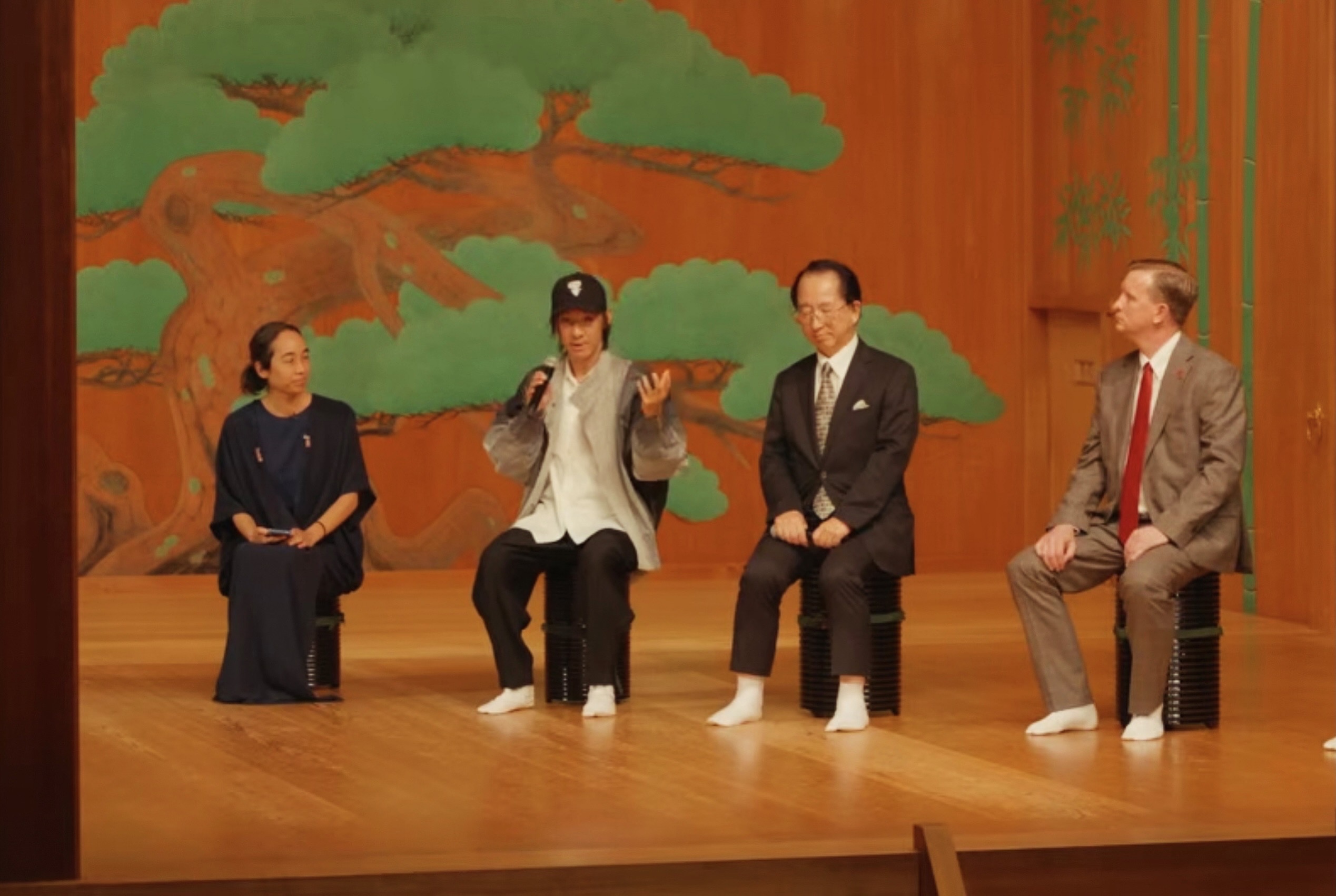
Each perspective opened a different door into the same question. Honma spoke of breath and stillness, and of Zeami’s teaching that what is not done is where the interest lies. Koizumi framed yūgen through time and space, contrasting the speed of AI with the slower pace of the human nervous system. Wilson argued that education must teach judgment, through real, global, and practical intelligence. EEPMON spoke as an artist working inside the tools, tracing the collaboration to his Prince Takamado Gallery show, and describing restraint as the cut: knowing when to stop, when nothing is wasted, and when a work made to respect Noh’s essence is complete.
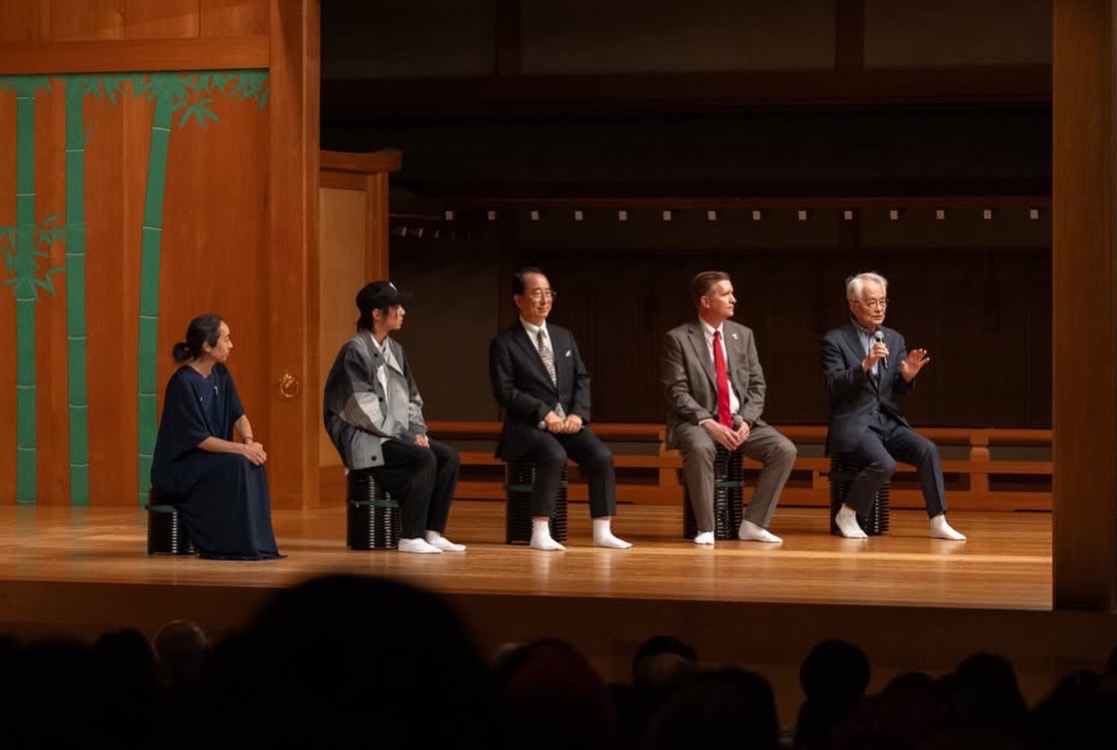
Special Performance: A performance of Kiyotsune (Shimai Dance) by Naoto Umewaka.
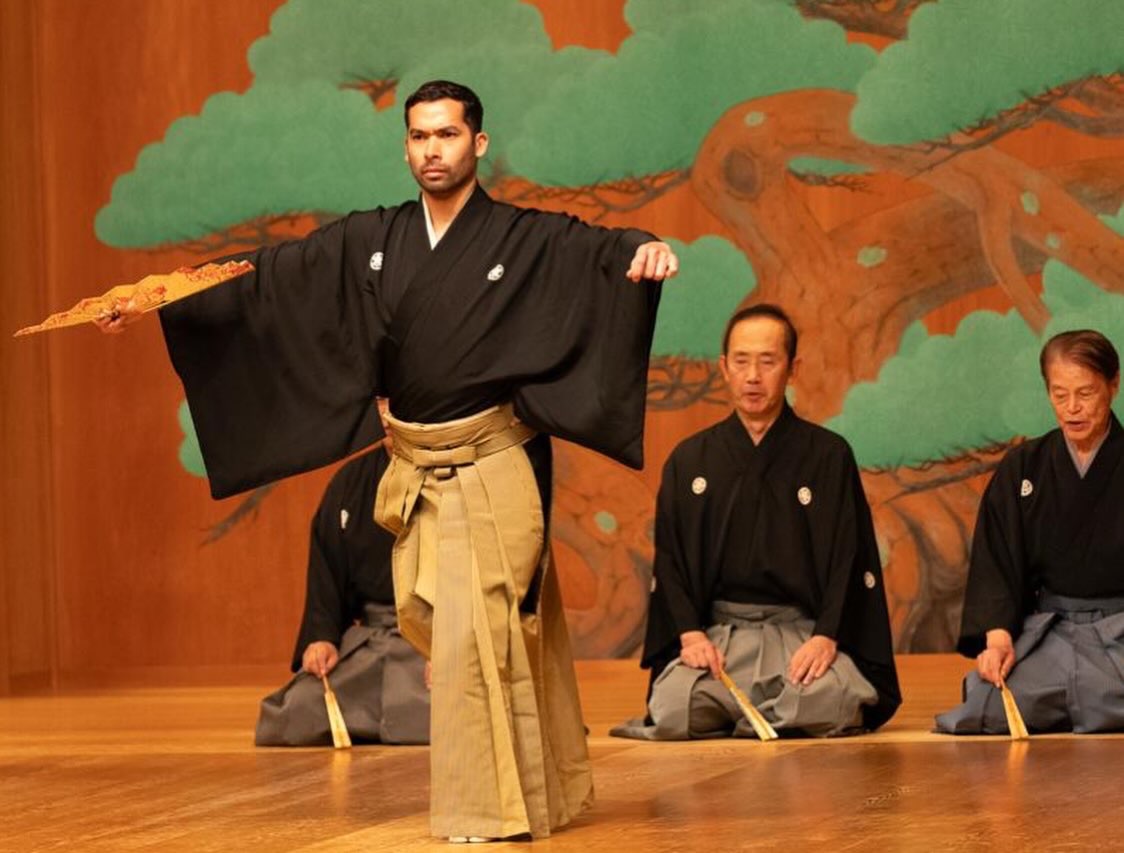
At 16:40, following the round table discussion, Kiyotsune was presented as a shimai dance, performed by Umewaka Naotomo. Drawn from The Tale of the Heike, it tells of Taira no Kiyotsune, who drowns himself in despair after defeat in battle. In shimai form, the play is distilled to its dance, as his spirit reappears to his grieving wife to recount his tragic end and seek resolution. Brief and concentrated, it served as a quiet bridge between the discussion and the contemporary work that followed, returning the afternoon to the body, to movement, and to a spirit seeking rest.
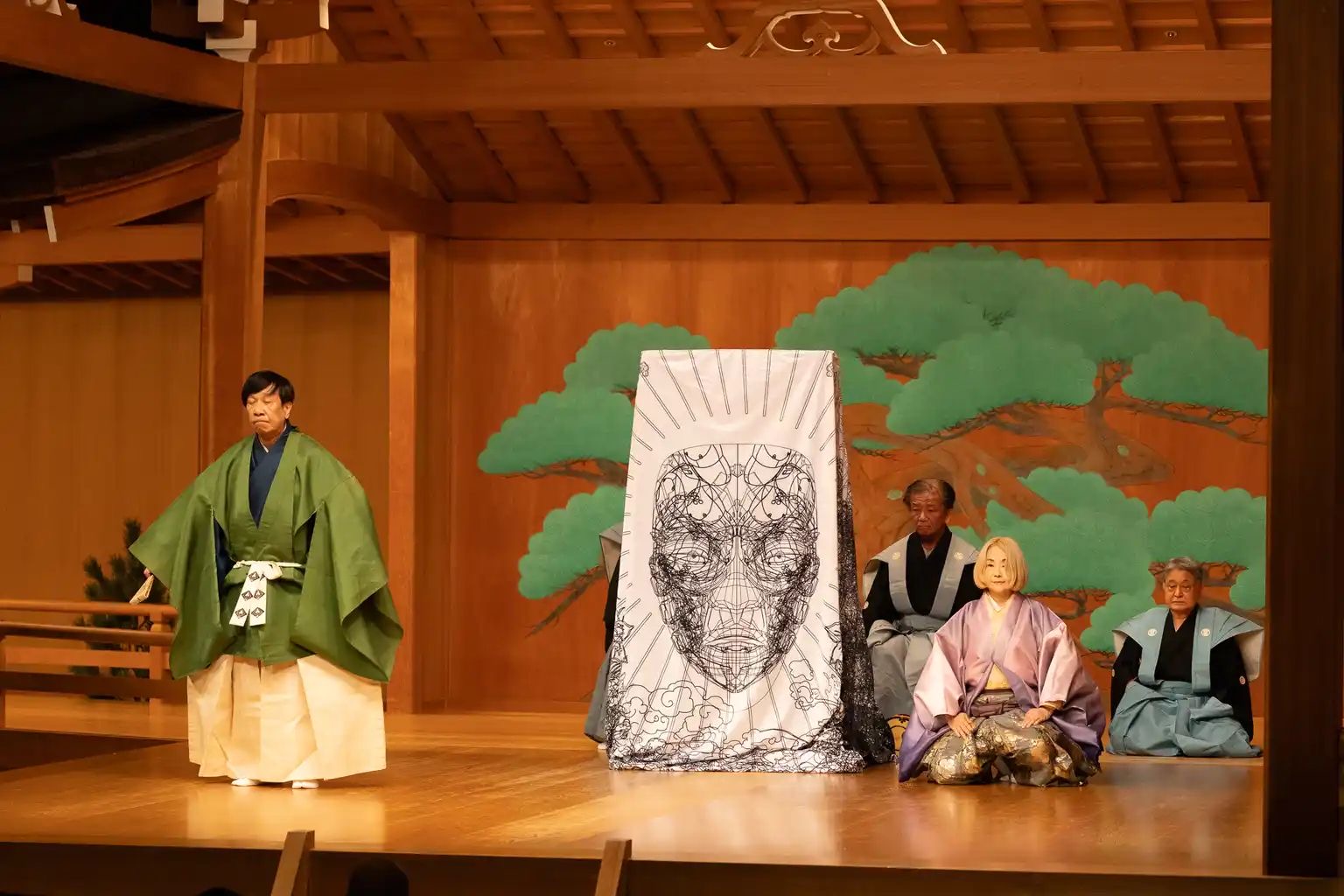
Ryūgū Kozō (The Boy from the Dragon Palace) closed the afternoon at 16:45 as a contemporary Noh excerpt, directed by Umewaka Soraya and written by Umewaka Naohiko, in collaboration with EEPMON. Guided by a mysterious dream, a traveler journeys to the village of Kurumeki, where a local woman shares the legend of Ryūgū Kozō, a benevolent water spirit from the Dragon Palace who befriended the village but tragically perished. Moved to offer prayers at his grave, the traveler witnesses the boy’s radiant spirit emerge to perform a final spring dance before returning to the earth.
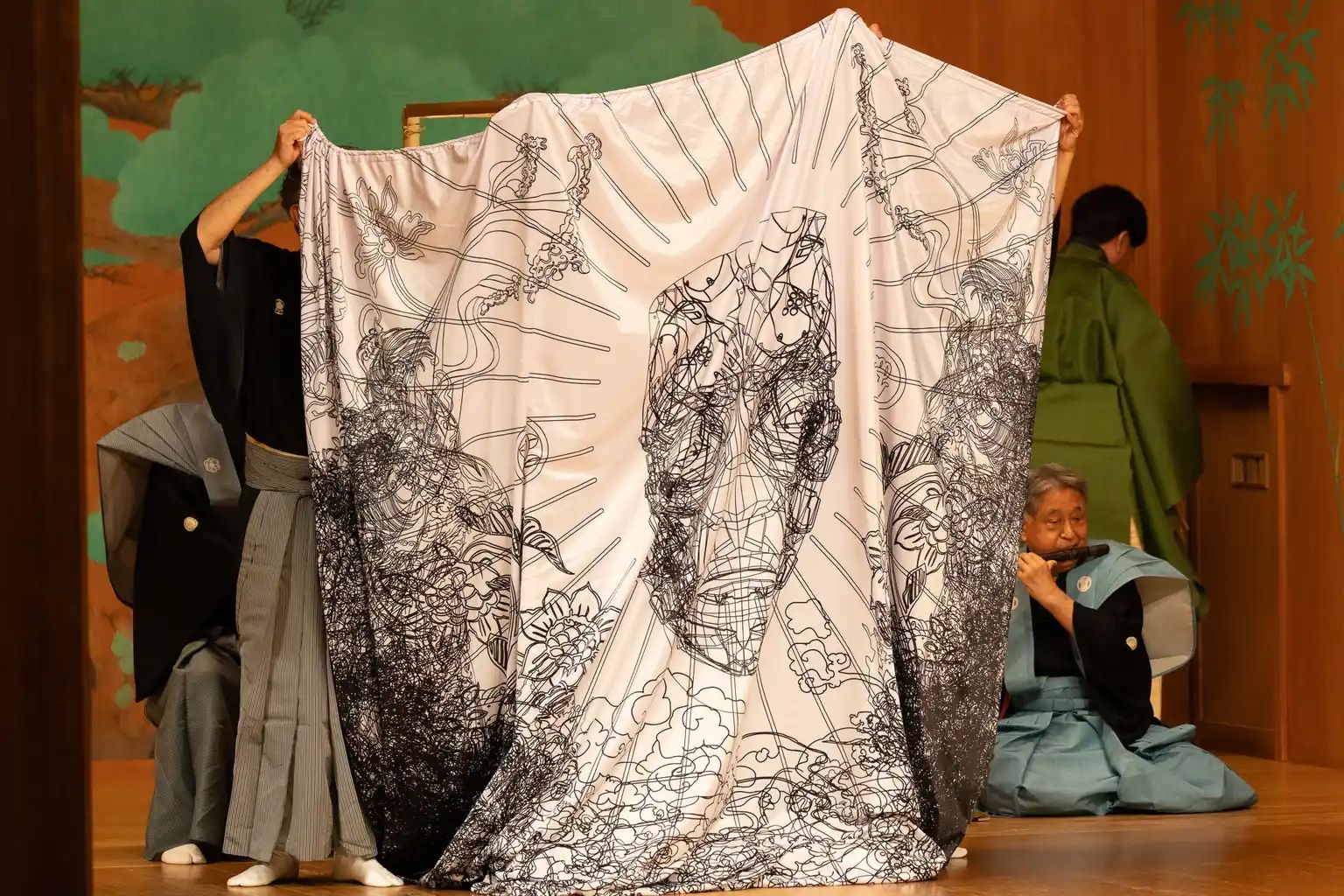
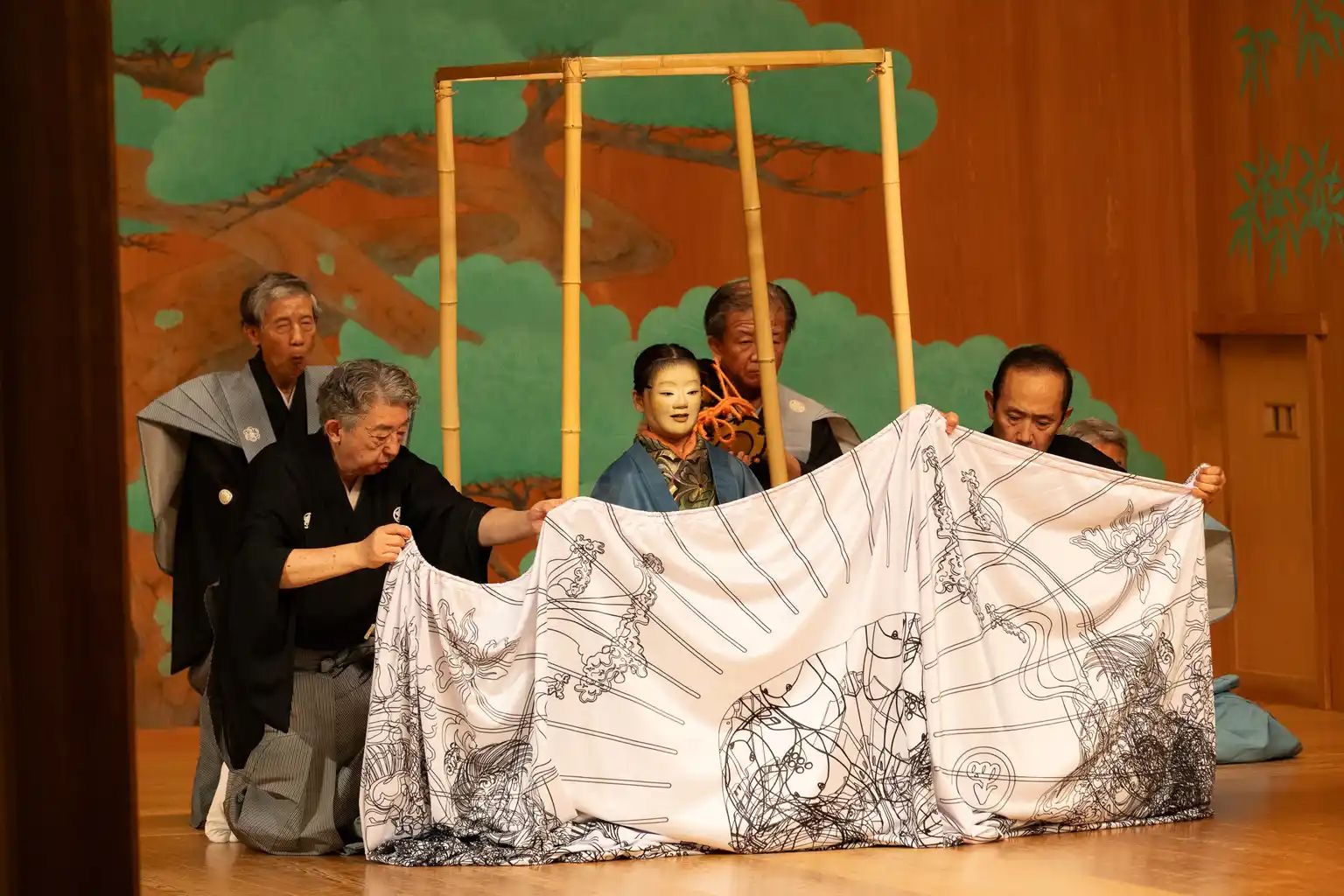
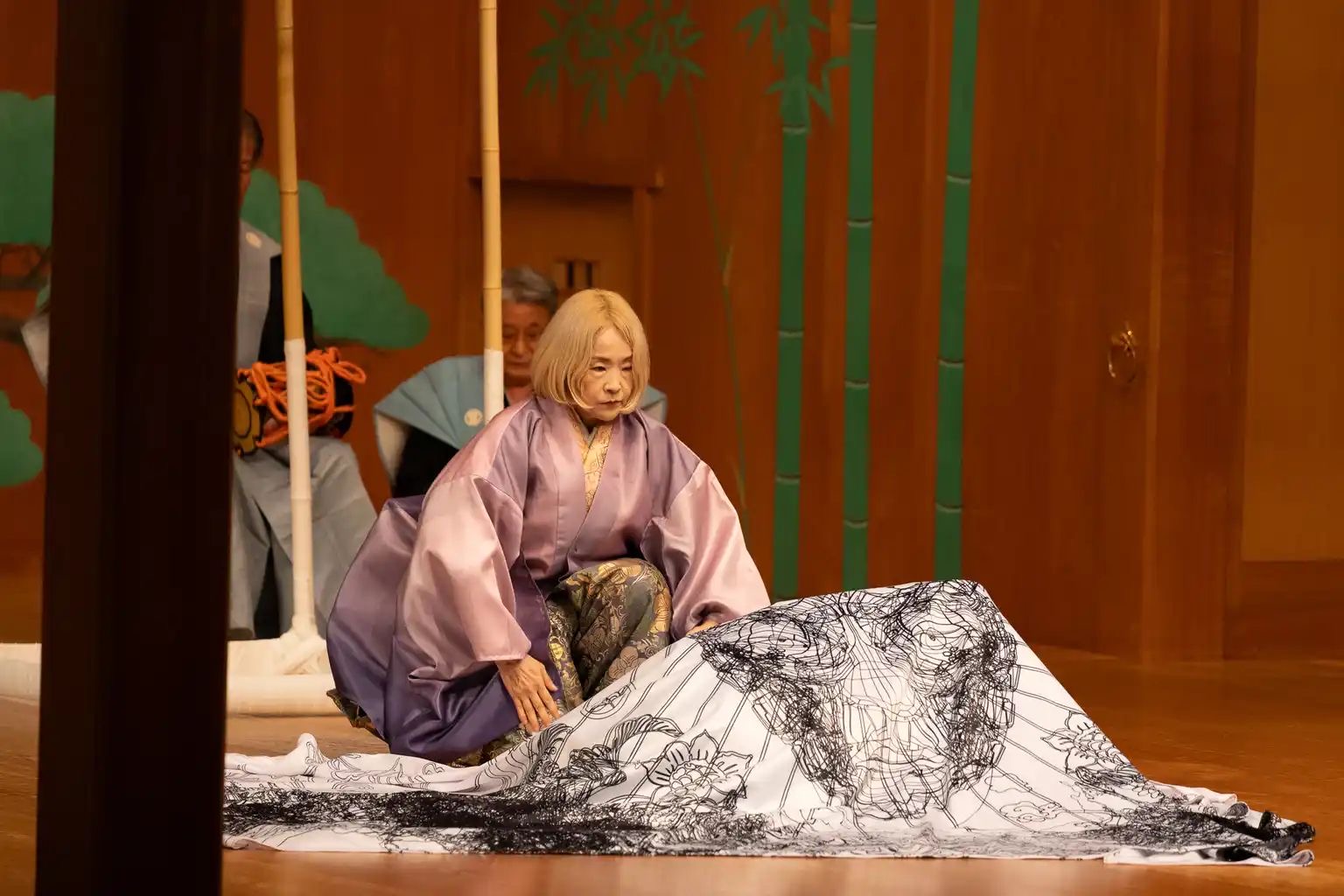
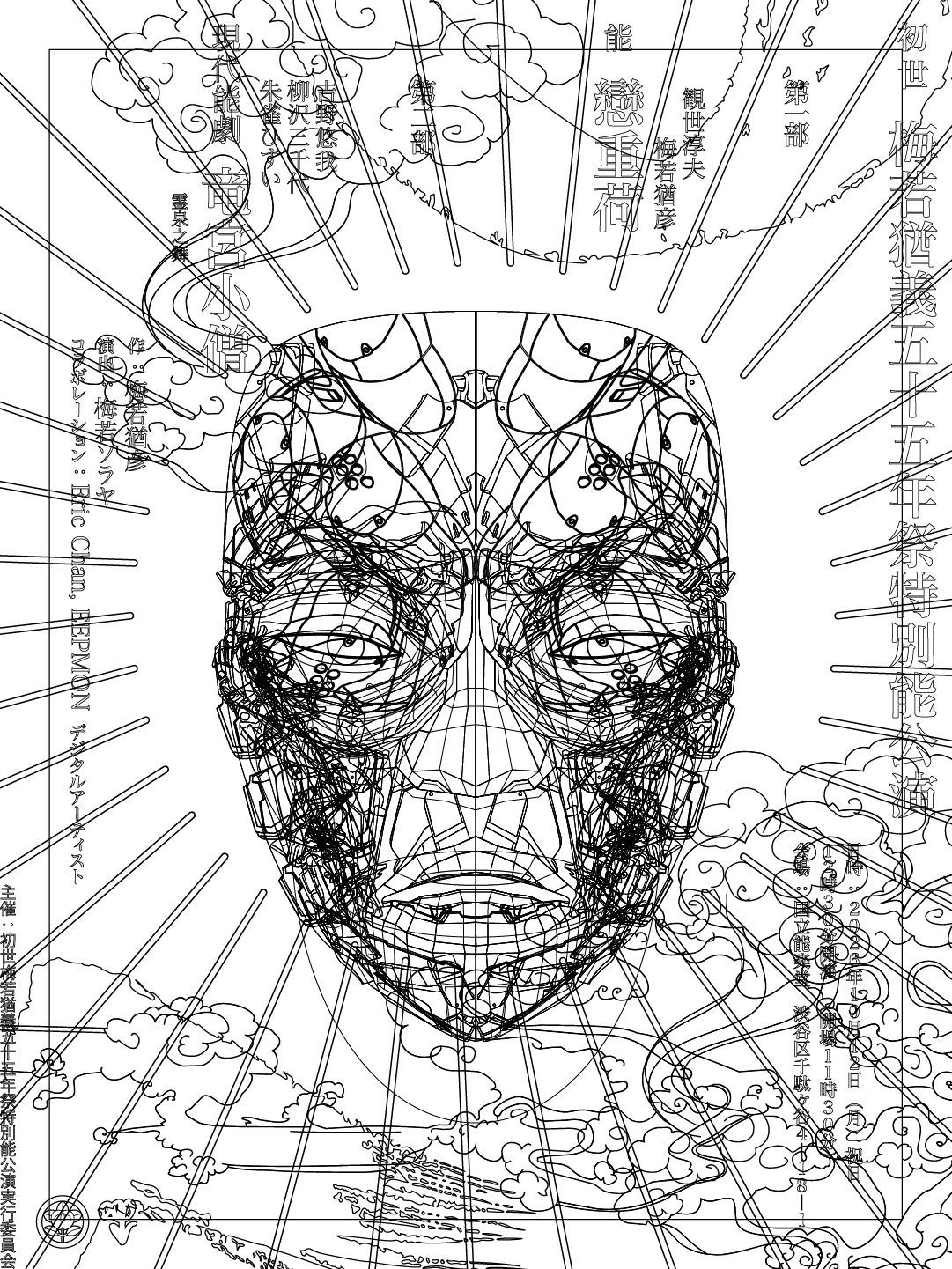
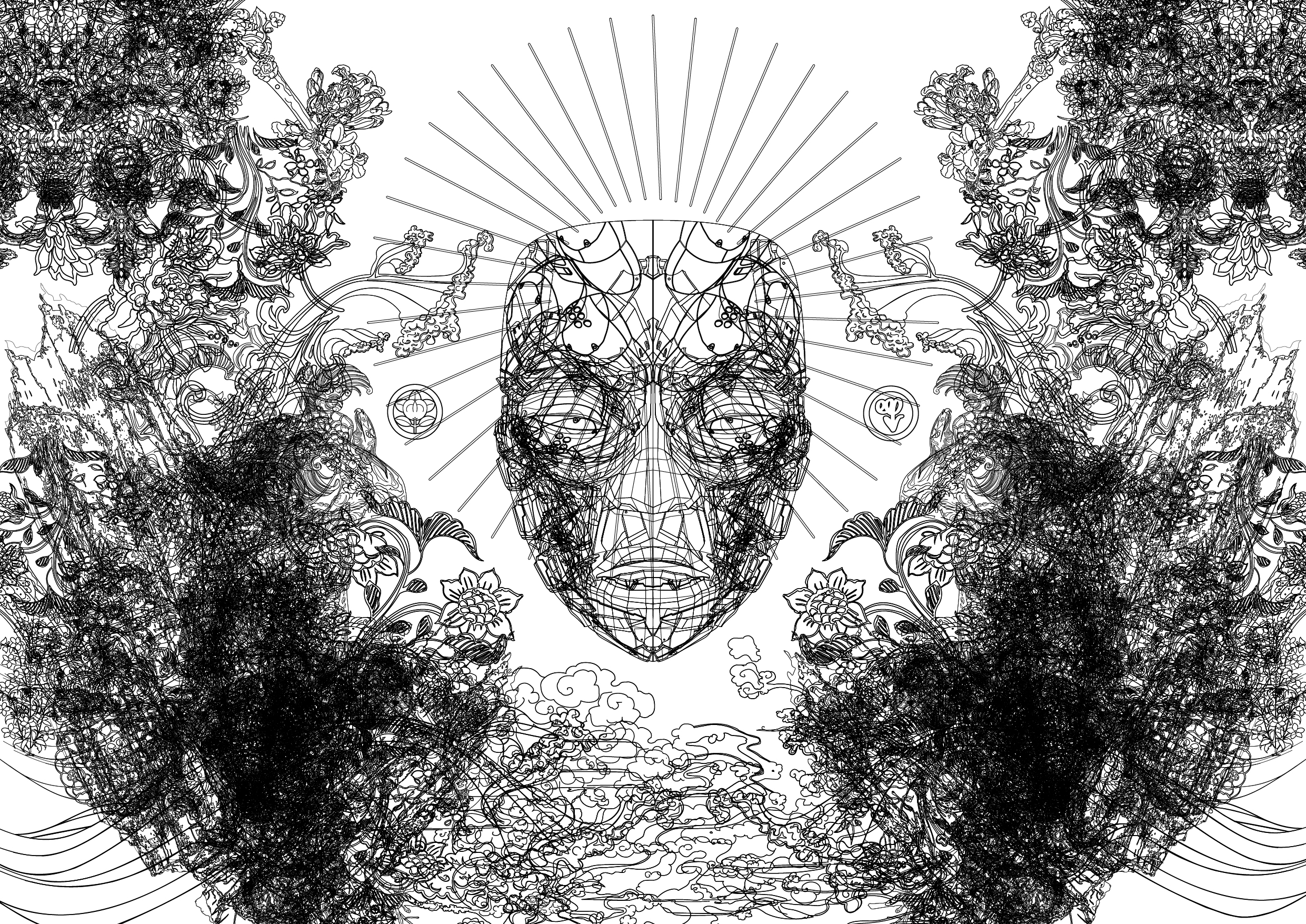
EEPMON’s contribution was a key element of that performance, not a projection. As EEPMON wrote on Instagram, Naohiko-san’s response to the work in progress of Mecha Ryūgū Kozō 001 XRAY A was, “This is very Noh.” The mask combined drawn elements and computer code, created generatively and rewritten and layered over and over again, until switching to x-ray mode left only the outlines. That version was made to form like a Hikimawashi cloth and a blanket, not computer projected as some would have thought.
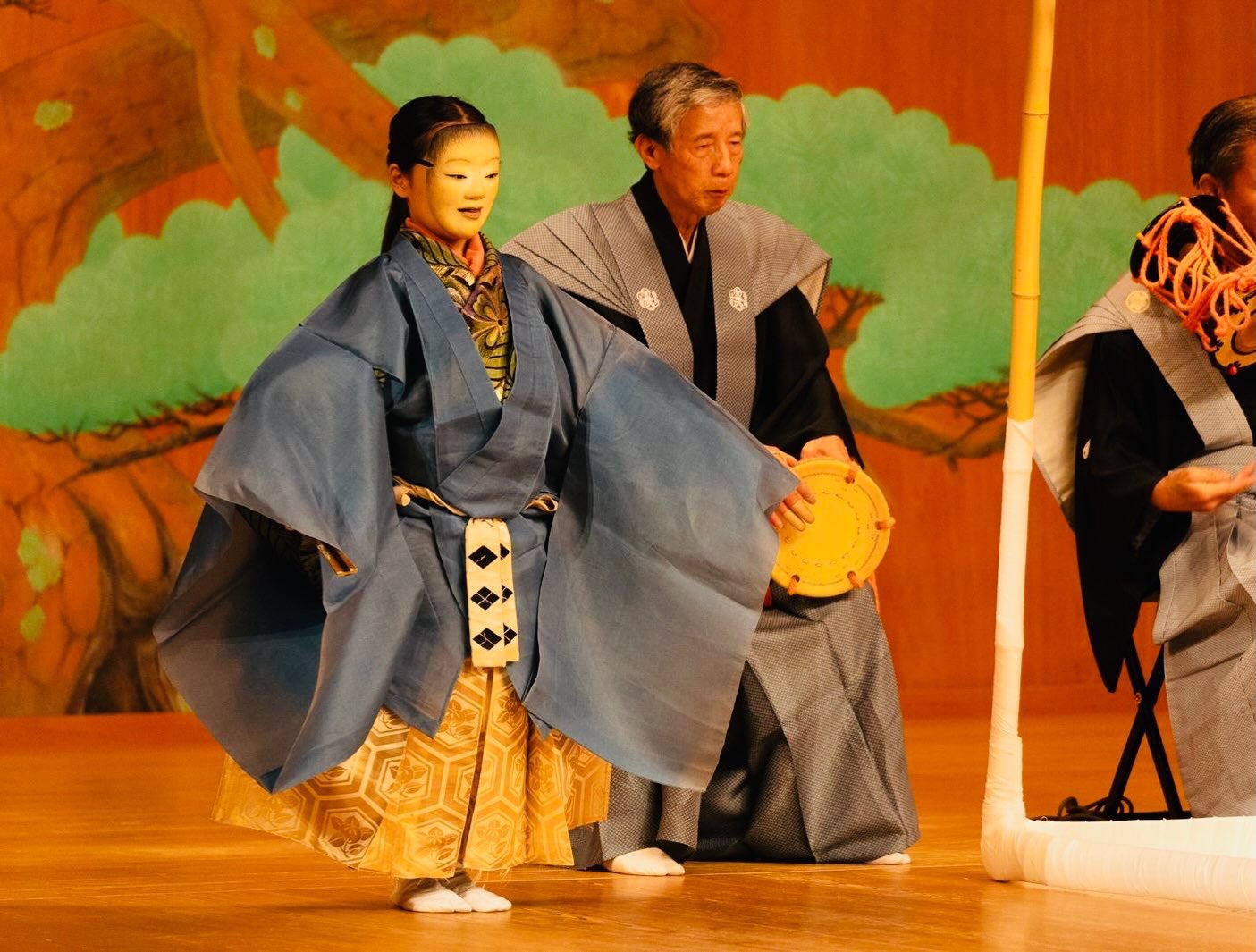
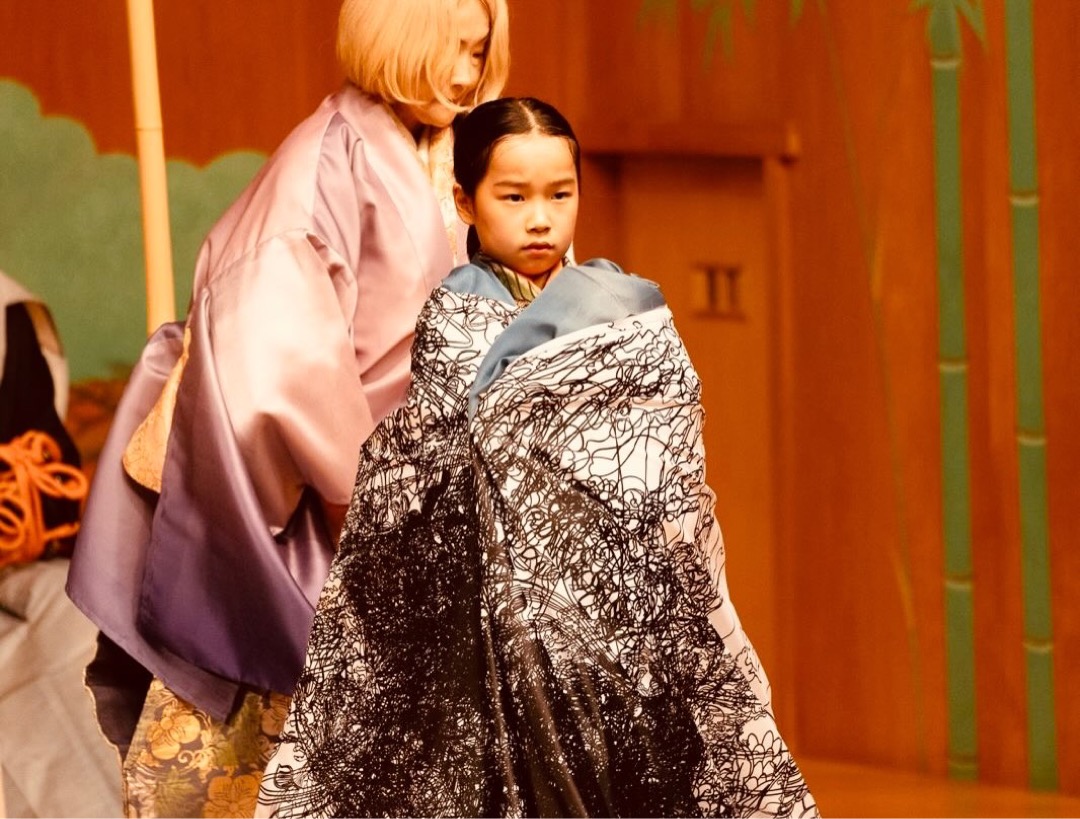
Sitting with the audience, EEPMON was emotionally moved to see it on stage, in pure black and white, as the notion of Yūgen emerged. For him, it was a perpetual oscillation between outward infinity and inward infinity, between absorption and reflection, between the many layers of a work and the single outline that remains when everything else falls away.
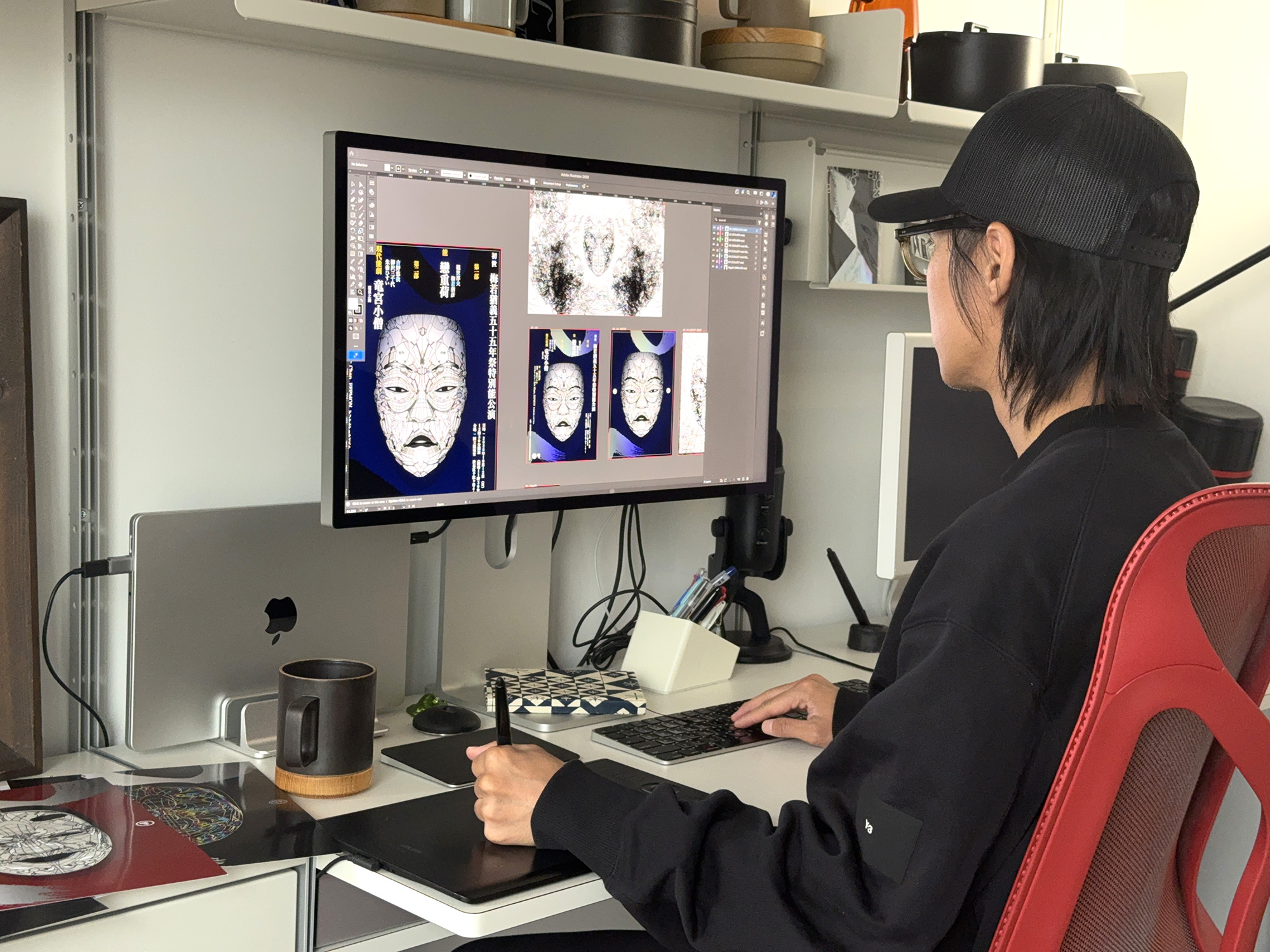
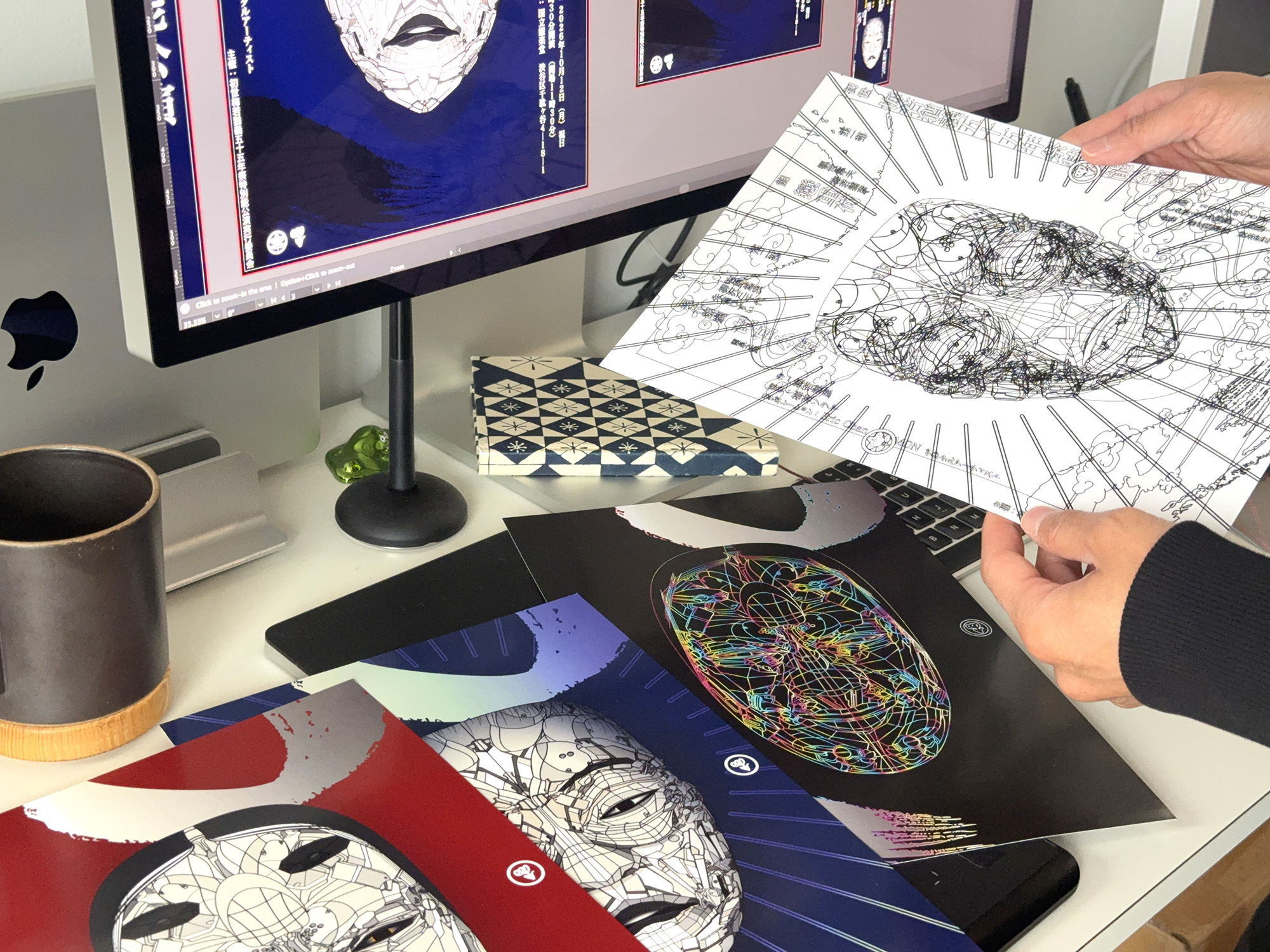
Behind the scenes, EEPMON working on his digital noh masks.